Get heat pump installation based on a room-by-room load calculation, so the system heats and cools evenly instead of cycling on and off.
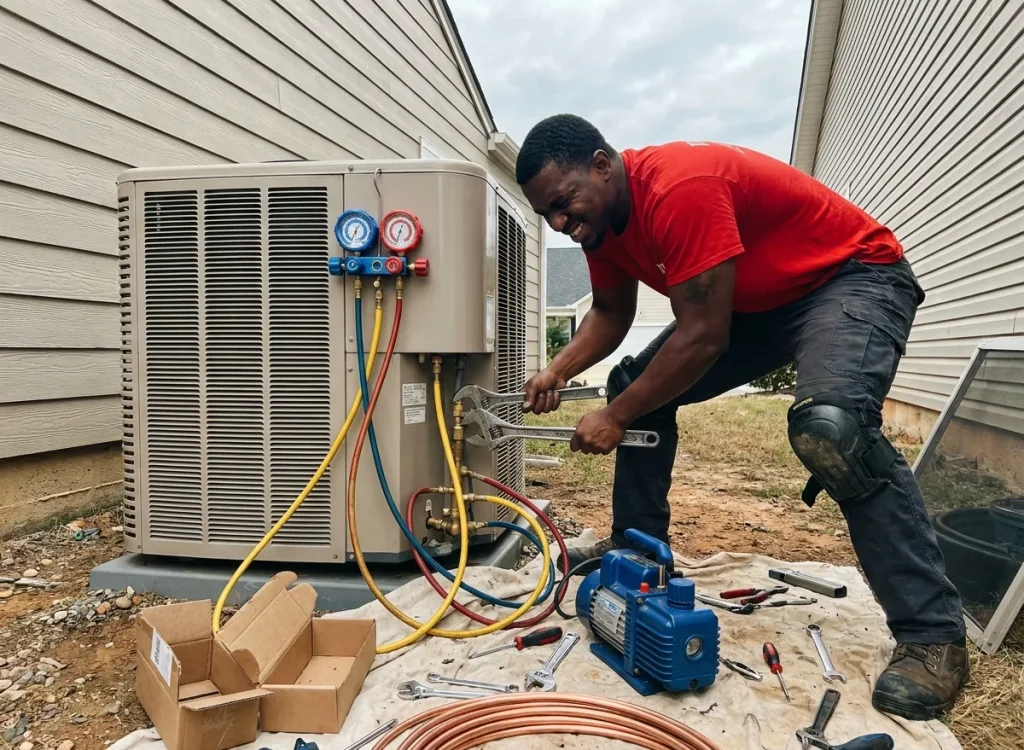
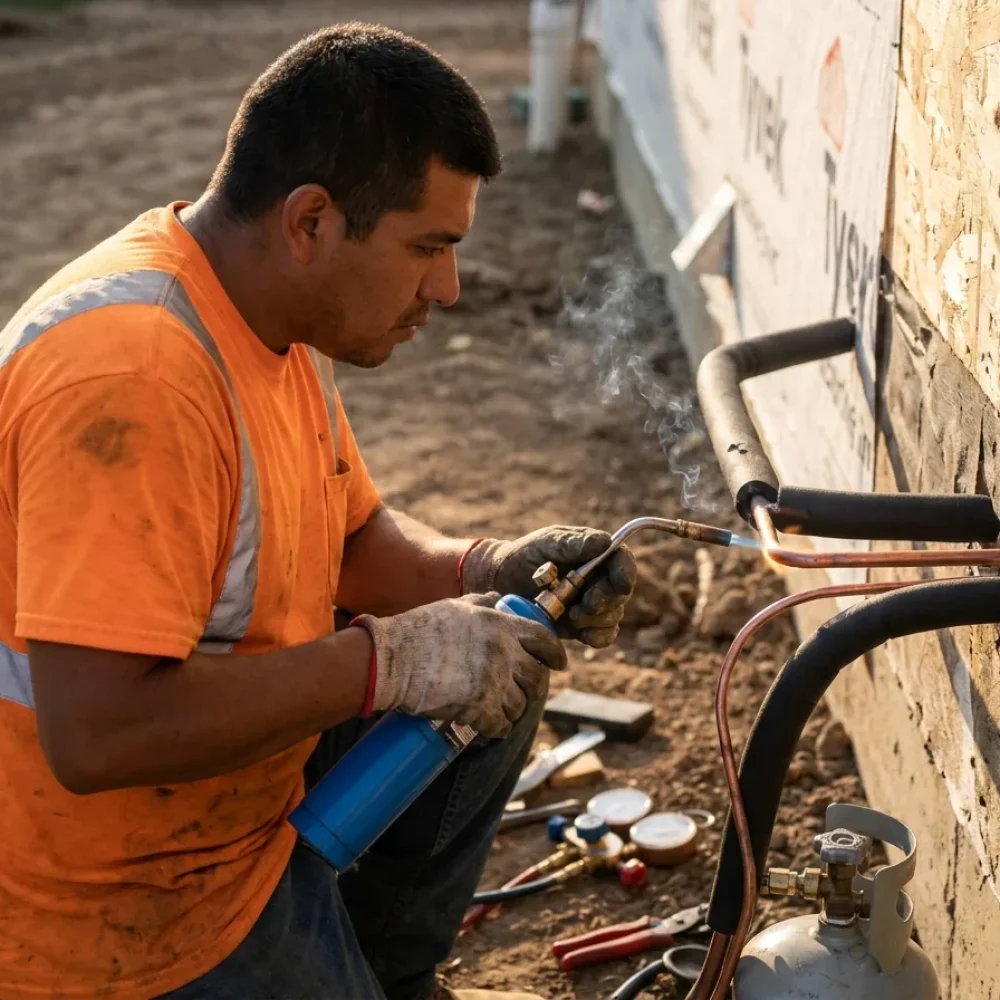
Heat pump installation quality shows up in details most people never see. Refrigerant lines need clean brazed joints and a proper vacuum before charging. Condensate lines need slope. The outdoor unit needs a level pad with clearance for airflow. Our in-house, licensed, bonded, and insured techs handle each step and test the system before leaving. We install heat pumps for homeowners across Riverside and nearby cities.
A heat pump replaces both the AC and furnace, using your existing ducts. We test those ducts for leaks first, since leaky ducts waste conditioned air.
Wall or ceiling heads serve single rooms or zones without ductwork. They work well for additions, converted garages, and rooms the main system never reaches.
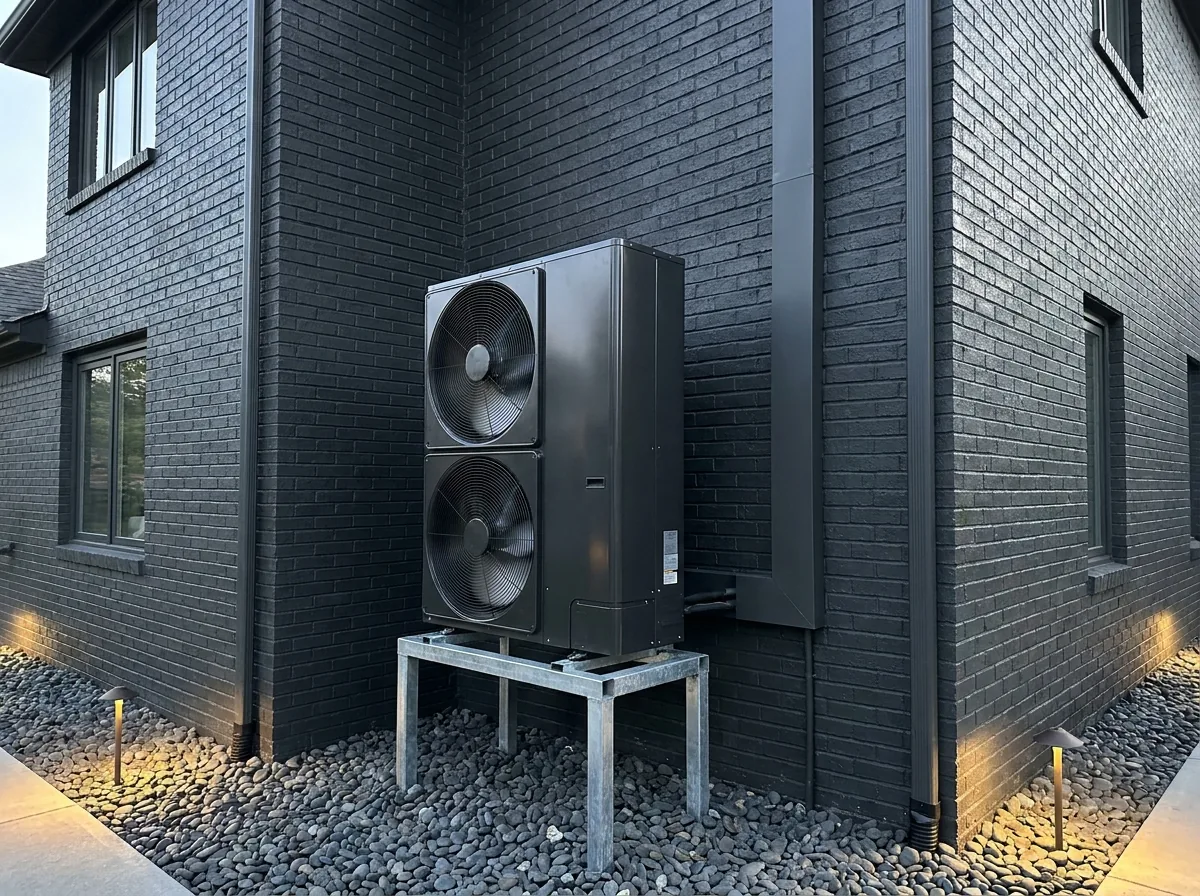
Swapping an old heat pump or AC is a chance to fix sizing. We recalculate the load instead of copying the old unit's tonnage.
Filter changes, coil cleaning, and refrigerant checks keep efficiency up. A dirty outdoor coil forces the system to run longer for the same comfort.
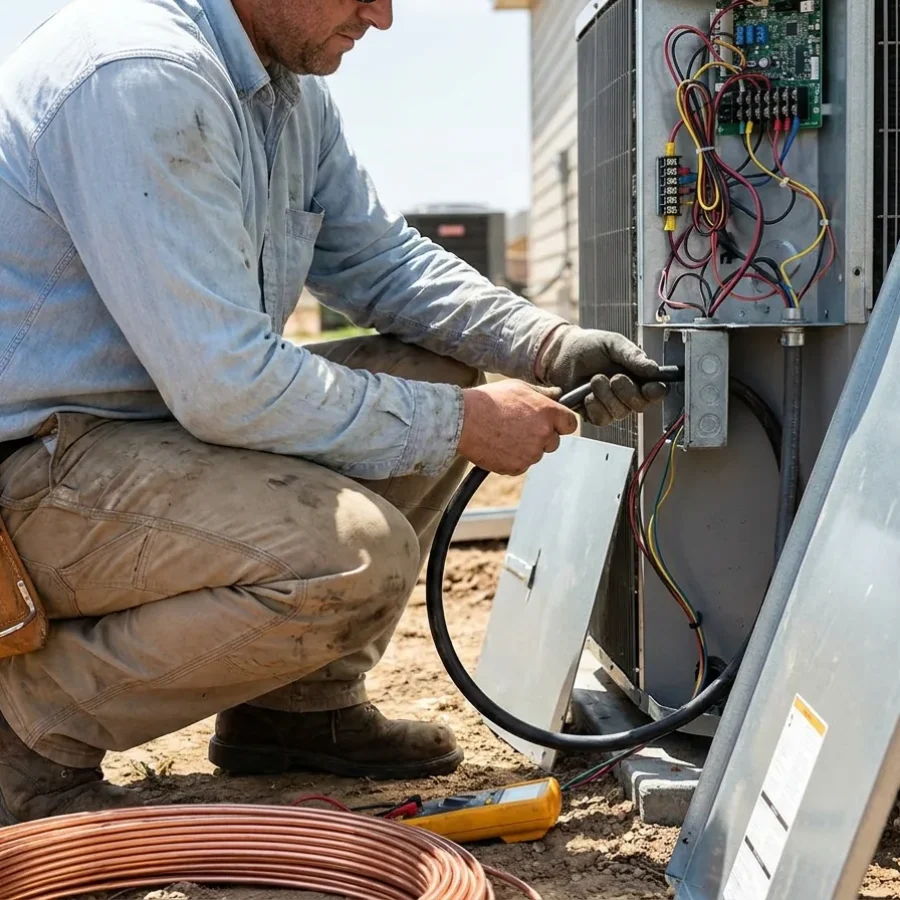
Every quote starts with a Manual J load calculation. An oversized unit short-cycles, wears out faster, and leaves rooms uneven.
Switching from gas heat can add electrical load. We check your panel capacity before quoting, so there's no surprise upgrade later.
We measure airflow, refrigerant charge, and supply temperatures at startup. You get those readings with your paperwork.
If a gas furnace or a hybrid system makes more sense for your home, we'll say so. The goal is the right system, not the biggest sale.
We measure rooms, check insulation, windows, and ducts, and look at panel capacity.
A Manual J load calculation sets the size, and you get written options for ducted, ductless, or hybrid systems.
Old equipment comes out, the new system goes in, and lines are brazed, pressure-tested, and evacuated.
We charge and test the system, walk you through the thermostat, and schedule the permit inspection.
Trustindex verifies that the original source of the review is Google. Working with flawless construction with Benjamin and Guy was exceptional. They are professionals all the way. They did my flooring and my barn door they worked extremely well, fast and clean. I took 3 estimates and they came in at the most reasonable ever and I will definitely use them again and refer themTrustindex verifies that the original source of the review is Google. Thank you Ben for all the renovations in the house. The kitchen, the bathroom, exterior paint and the fence all look fantastic! Thank you for being flexible and accommodating.Trustindex verifies that the original source of the review is Google. Luis did a great job, he was efficient, communicated very well, and was sure to make everything perfect just like we wanted. Thank you Luis and Flawless Contrustion!Trustindex verifies that the original source of the review is Google. Raz and Adam did an amazing job on my exterior paint I would highly recommend them they are the best in the business very professionalTrustindex verifies that the original source of the review is Google. We just completed a kitchen, bath, attic, and electrical panel remodel and we’re so pleased and satisfied with the work and our project manger, Ben Liv from Flawless Construction. It was a pleasure working with him and his company. The finished project was beyond our expectations.Finally the project price was competitive and affordable to our budget.Trustindex verifies that the original source of the review is Google. We recently completed an outdoor renovation with Flawless Construction, and we couldn’t be happier with the results! From start to finish, the entire process was smooth, professional, and exceeded our expectations. The crew was punctual, respectful, and extremely detail-oriented. They truly brought our vision to life and made sure every aspect of the project was handled with care and precision. It’s rare to find a team that combines quality craftsmanship with such a high level of professionalism—Flawless Construction delivered on both. We highly recommend them for any renovation project and will definitely be using them again in the future!Trustindex verifies that the original source of the review is Google. Hi guys thanks to raz and tony Ryan for the hard work they did my patio and roof and rain guttersTrustindex verifies that the original source of the review is Google. I worked with Flawless Construction on my front and backyard. At the front yard they did a brand new pavement doe my driveway and a beautiful design for a paver walk way to the front door. At the backyard they added new pavement in order for me to park and store my car collection. They also added a French drain. The crew were on time, clean and did a very good job. The project manager Ron did a great job with communication and made sure I was satisfied the entire time. Highly recommended!!
Rooms that swing between hot and cold, a system that runs in short bursts, and a house that feels clammy are common signs of an oversized heat pump. It happens when the unit is sized by rule of thumb or matched to the old system’s tonnage. A unit that’s too big reaches the thermostat setting quickly and shuts off before removing humidity. Constant starting and stopping also wears parts faster. The fix is a room-by-room load calculation before heat pump installation starts. For background, the DOE Energy Saver guide explains how heat pumps work, and our HVAC team sizes every system this way.
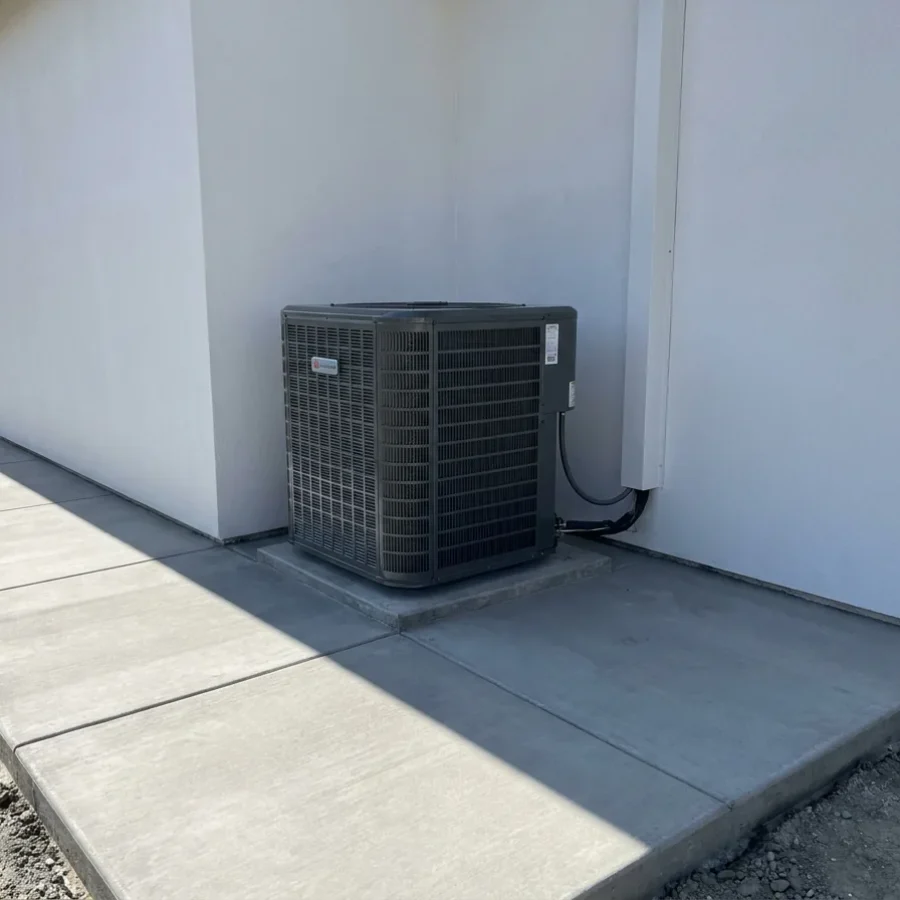
The best heat pump installation is measured, not guessed. After sizing the system, we check duct leakage and seal the worst joints, since a heat pump can only deliver what the ducts carry. At startup, we record refrigerant charge, airflow, and supply temperatures, then give you the readings. Heat pump replacement jobs get the same process, even when swapping like for like. That paperwork also helps with warranty claims and future service visits. Pairing the system with solar can offset its electricity use, and our solar panel installation team can plan both together. Ask about a free home assessment.
Answers to common heat pump installation questions. See our energy efficient services or call Flawless Construction Inc.
Cost depends on system type, size, and what your home already has. A ducted system that reuses good ductwork costs less than one needing duct repairs or replacement. Ductless mini-splits are priced by the number of indoor heads. Switching from gas heat may require an electrical panel upgrade or new circuits, which adds cost. Equipment efficiency ratings also affect price, since higher-efficiency units cost more upfront. We give you a written estimate after a home assessment and load calculation. Rebates and incentives change often, so we point you to current programs rather than promising a specific amount.
Yes, and they work especially well in mild winters. A heat pump moves heat from outdoor air into your home instead of burning fuel. Even cool air holds usable heat. As temperatures drop very low, efficiency declines, and some systems use backup electric heat strips. In areas where winter nights rarely get truly cold, a correctly sized heat pump handles heating on its own for most of the season. Cold-climate models are built to keep working at lower temperatures. We look at your home and local conditions and recommend a model that fits, not the most expensive one.
It depends on your home, your electrical service, and your goals. A heat pump replaces both your AC and furnace with one system, which simplifies equipment. It also removes gas combustion from inside the house. On the other hand, switching can require a panel upgrade, and gas rates versus electric rates affect operating cost. A hybrid system, pairing a heat pump with a gas furnace for the coldest days, is another option. If you have solar or plan to add it, a heat pump often fits well. We compare the options for your home in writing so you can decide.
The right size comes from a load calculation, not square footage alone. A Manual J calculation looks at insulation levels, window size and orientation, air leakage, ceiling height, and local climate data. Two houses of the same size can need very different systems. Guessing big is common, and it causes short-cycling, poor humidity control, and uneven rooms. Going too small leaves the system running nonstop on hot afternoons. We do the calculation room by room during the assessment. That also tells us whether some rooms need better airflow, which a bigger unit wouldn’t fix.
A ducted heat pump works like a central AC, sending air through your existing ducts to every room. It’s a natural fit when good ductwork is already in place. Ductless mini-splits mount indoor heads on walls or ceilings, each serving a room or zone, connected to an outdoor unit by small refrigerant lines. They’re a good choice for homes without ducts, additions, garage conversions, or rooms the central system can’t reach. Ductless systems also let you control each zone separately. Some homes use both, with a ducted system for the main house and a mini-split for a hard-to-cool room.
Sometimes. If your home currently heats with gas, a heat pump shifts that heating load to electricity. Older panels may not have the capacity or open breaker space. We check your panel’s rating and existing loads during the assessment. Many homes can handle a heat pump without an upgrade, especially when it replaces an existing central AC that already has its own circuit. When a panel upgrade is needed, we include it in the estimate so there are no surprises. If you’re also planning solar or an electric vehicle charger, it’s worth planning panel capacity for everything at once.
Lifespan depends on installation quality, sizing, and maintenance more than brand. A correctly sized system with a proper refrigerant charge runs in longer, steadier cycles, which is easier on the compressor. Oversized units short-cycle and wear out faster. Dust and debris can shorten outdoor coil life if the unit isn’t cleaned. Heat pumps also run year-round, heating and cooling, so they see more hours than an AC alone. Regular maintenance, including filter changes and coil cleaning, helps the system reach its full service life. Manufacturer warranties vary, and we give you the actual warranty documents.
Yes. Our HVAC installers are Flawless employees who are licensed, bonded, insured, and background-checked. The same team does the assessment, installation, and startup testing, so nothing is lost in a handoff. Heat pump work depends on careful refrigerant handling, and keeping installers in-house means we control how lines are brazed, pressure-tested, and evacuated. You also get one company responsible for the whole job. If anything needs adjustment after installation, the team that installed the system comes back to handle it. We don’t pass heat pump jobs to a subcontracted crew.
We provide heat pump installation for homeowners in Riverside and nearby cities, including Corona, Moreno Valley, and San Bernardino, and we also work in Woodland Hills. Summer heat is the main design factor across these areas, so we size systems for cooling loads as carefully as heating. New equipment typically needs a mechanical permit, and we handle the permit and inspection. If your home is outside these areas, call anyway. We’ll tell you honestly whether we can take the job or recommend someone closer to you. A quick call is all it takes.
Flawless Construction: Excellence in custom homes, renovations, and remodeling, delivering superior quality and meticulous attention to detail.
© All Right Reserved By Flawless Construction INC.
Build With ❤️ By BigBrandify.Com