








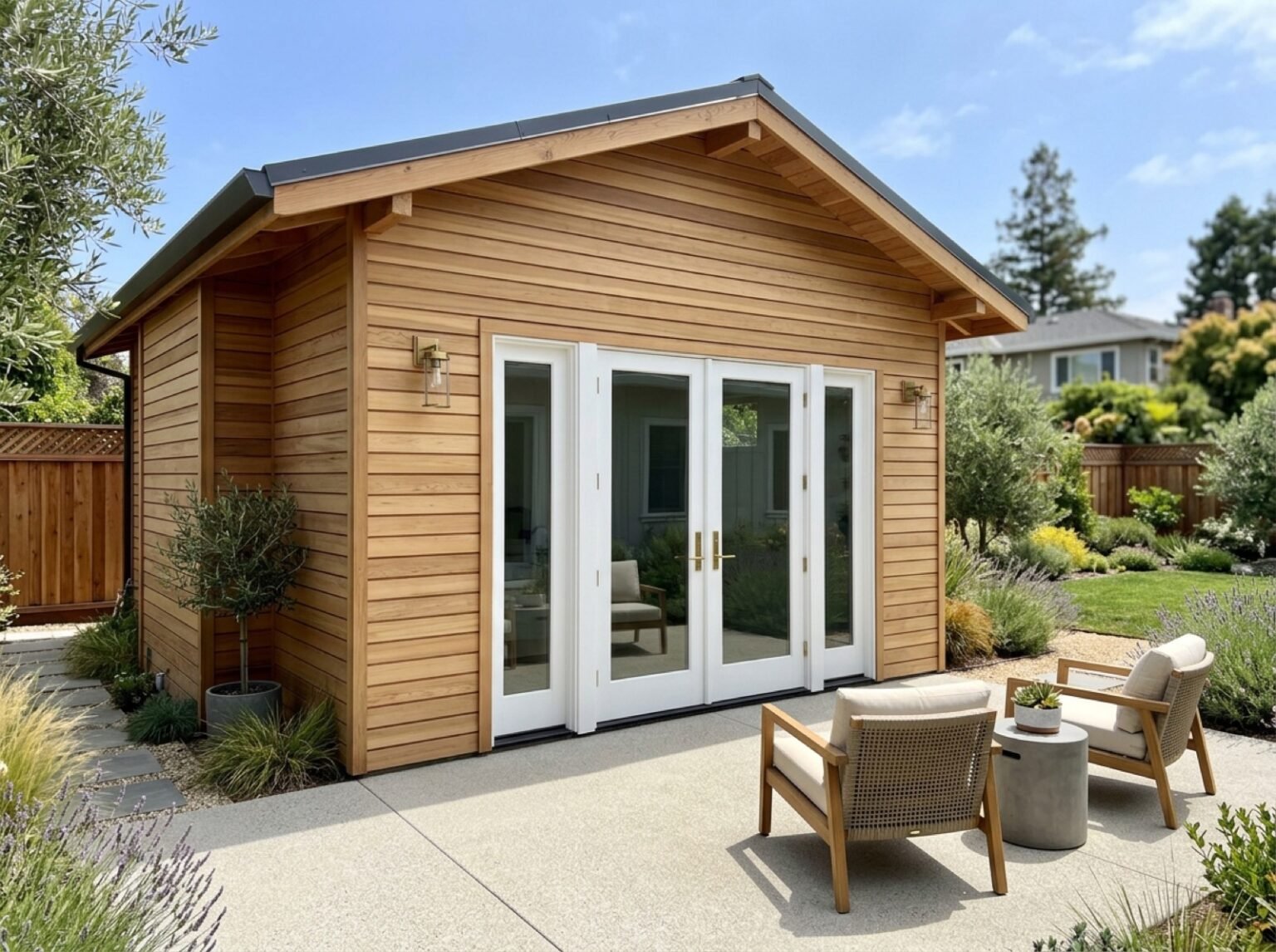
Junior ADU vs ADU is a choice between a small unit inside your house and a complete, larger home on your lot. The two names sound alike, yet the rules differ. So it helps to compare them side by side before you plan.
This guide explains the main differences for California homeowners. However, rules change and cities apply them differently, so confirm the details for your address.
What is a standard ADU?
An accessory dwelling unit is a complete, independent living space on the same lot as a home. It has a kitchen, a bathroom and room to sleep and live. For example, it can stand alone in the backyard.
It can also be attached to the house. Alternatively, it can be made from a garage or other existing space. Our ADU builders page covers new units.
What is a junior ADU?
A junior accessory dwelling unit, or JADU, is made within the walls of a single-family home. A spare bedroom or an attached garage are common examples. State law limits a JADU to 500 square feet of interior livable space.
In addition, it needs its own entrance and an efficiency kitchen. The bathroom can be separate or shared with the main house. That choice matters, as the occupancy section explains.
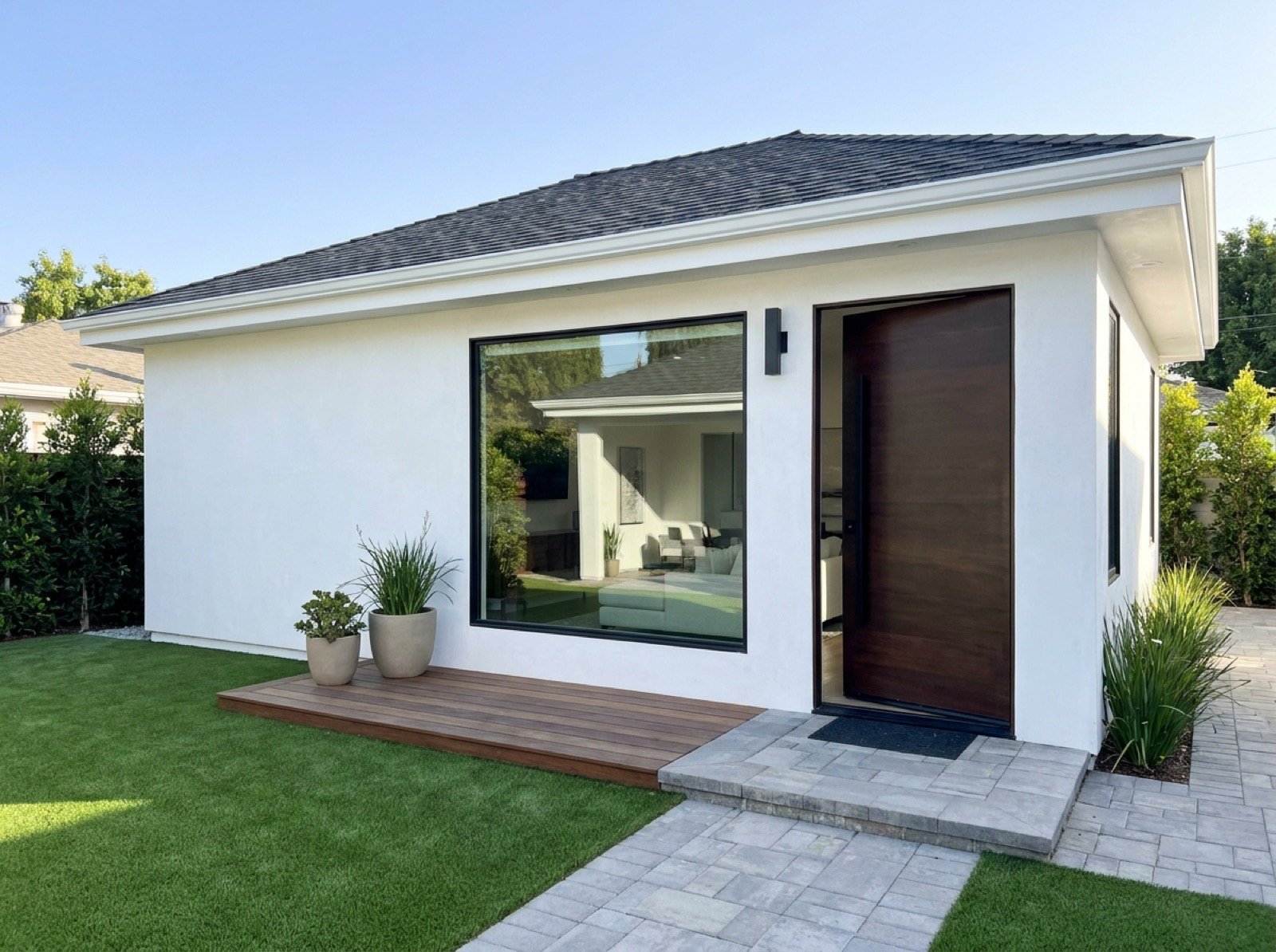
Junior ADU vs ADU at a glance
- Location: an ADU can be separate, while a JADU sits within the house.
- Size: a JADU is capped at 500 square feet, and ADU limits are larger.
- Kitchen: an ADU has a full kitchen, but a JADU can use an efficiency kitchen.
- Bathroom: an ADU has its own, whereas a JADU may share one.
- Building work: a JADU usually reuses walls, floor and roof.
Even so, a JADU still needs real construction. Electrical work, safe exits and fire separation all matter. Therefore, do not treat it as a simple room rental.
Owner occupancy and rental rules
This area changed recently. Under AB 1154, which updated the state JADU rules, owner occupancy now turns mainly on shared sanitation. In other words, it applies when the JADU shares a bathroom with the main house.
The same update requires rental terms longer than 30 days for a JADU. As a result, short-term rental plans do not fit. However, older city pages may still show earlier wording.
For this reason, ask your city planning department before you design. Also, check any deed restriction it records. A homeowners association may have its own process as well.
Permits for a Junior ADU vs ADU
Both types need permits and inspections. Plans must show exits, smoke alarms and separation between living areas. For Los Angeles addresses, start with Los Angeles City Planning.
Moreover, fees differ by unit. State law exempts JADUs and ADUs of 750 square feet or less from impact fees. Other charges, such as plan check, can still apply.
Utilities, parking and privacy
Utilities are often simpler for a JADU, since it sits inside the house. A standard ADU may need new trenching or a panel upgrade. Consequently, the site work can differ a lot.
Privacy is another factor. A detached unit gives more separation for a tenant or relative. In contrast, a JADU shares walls, so sound control deserves attention.
Parking rules vary by location. So confirm them early, especially if you convert a garage. Our garage conversion page explains that route.
Cost factors for each option
Generally, a JADU involves less new building. However, adding a bathroom or a separate entrance still takes skilled work. A detached ADU needs its own foundation and shell.
Therefore, compare the full scope, not only the size. You can read what shapes ADU costs in Los Angeles. Then weigh that against your goal.
Which option makes sense for you?
When you weigh a Junior ADU vs ADU, start with how you will use the space. A JADU suits unused interior space, such as a bedroom with an outside door. For instance, it can house an adult child or a parent.
A standard ADU suits owners who want more room and full separation. It can also work like a small home. Meanwhile, some lots may allow both, depending on local rules.
A short checklist
- First, decide who will live there.
- Then measure the space you can give up.
- Next, check your bathroom and entrance options.
- Finally, confirm city rules before drawing plans.
Common questions about Junior ADU vs ADU
Can a JADU have its own bathroom?
Yes, it can. A shared bathroom is also allowed, and that choice affects occupancy rules.
How big can a JADU be?
State law caps it at 500 square feet of interior livable space.
Is a JADU cheaper than an ADU?
Often it is, because existing walls and roof stay. Still, the condition of the house can change that.
Talk it through with a builder
Flawless Construction is a California licensed contractor, CSLB License #1095616, based in Woodland Hills. Call (213) 399-3914 or request a free consultation through the website to talk through your options.